Inside a NokVision Eye Screening: Step-by-Step
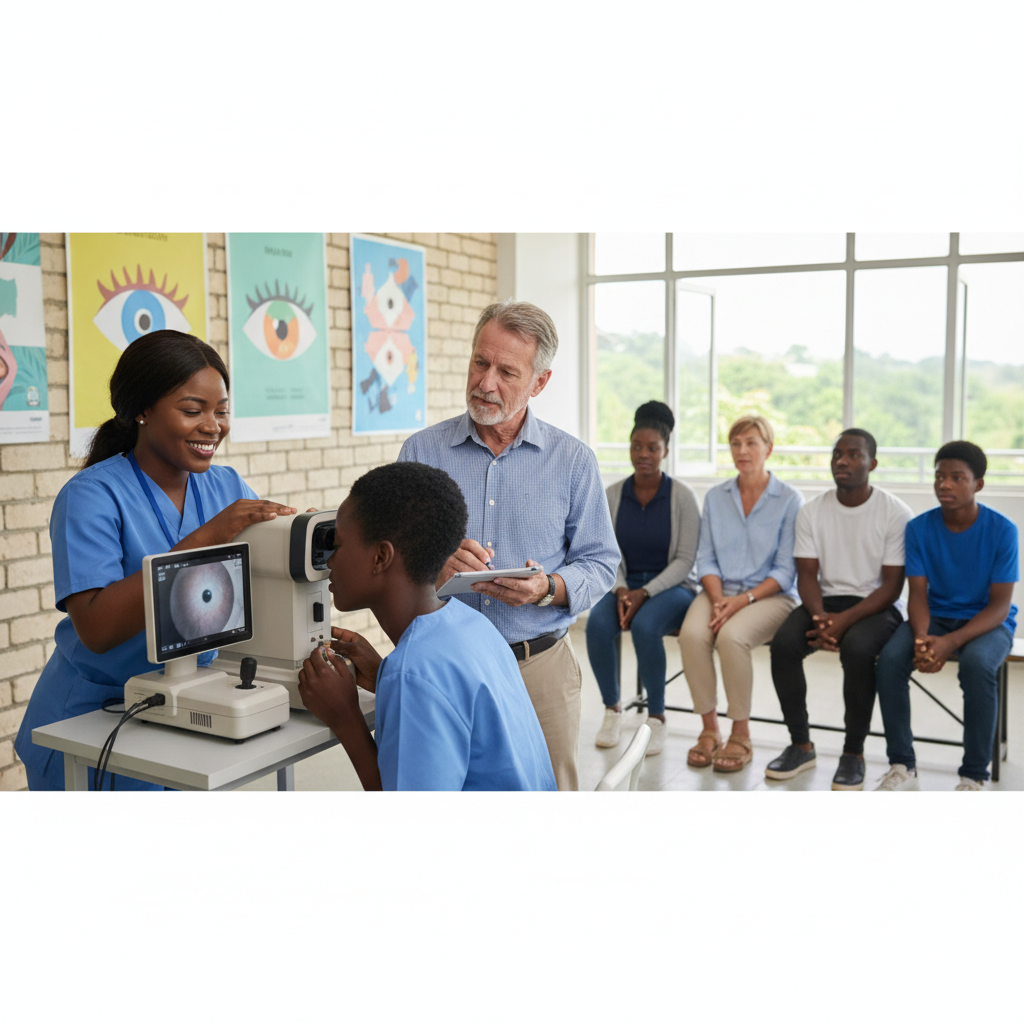
When a health team shows up unannounced in a community, suspicion is natural — and completely understandable. People want to know who you are, what you want, and most importantly, whether you can be trusted. That's exactly why NokVision Care Foundation built its free community eye screenings to be radically transparent, dignity-first, and entirely community-led from the very first moment.
Why Communities Hesitate — And Why That's Valid
Across underserved communities in Nigeria, unfamiliar health interventions often trigger caution. Previous experiences with disorganized outreaches, data collection without follow-through, or services that never returned have left many communities rightfully skeptical.
NokVision doesn't gloss over that reality. Instead, the entire screening process is designed to answer every unspoken question before it's even asked. Transparency isn't an afterthought — it's baked into every single step.
Before the Screening Day
Community Entry and Trust-Building
NokVision never parachutes into a community without invitation and preparation. Weeks before a screening, the foundation's community liaison team engages local leaders — ward heads, religious leaders, market association chairs, and women's group coordinators.
This groundwork ensures the screening belongs to the community, not just to NokVision. Community members help select the venue, set the dates, and spread the word through trusted local voices — not just flyers.
Pre-Registration and Education
A pre-screening education campaign runs in the days leading up to the event. Short, plain-language messages in local languages explain what will happen, who will be there, and what participants should expect.
The messaging is clear on four things:
This isn't just good practice — it's how NokVision treats every beneficiary as a person with full autonomy, not a recipient of charity.
Arrival: The First Five Minutes Matter Most
A Welcoming, Organized Environment
On screening day, participants arrive to a clearly marked, clean, and calm environment. Signage in English and local languages guides people through each station. Volunteers — many of them community members trained by NokVision — warmly greet each person at the entrance.
No one is rushed. No one is turned away. There are dedicated areas for children, the elderly, and nursing mothers, because dignity-first care means meeting people exactly where they are.
Registration Without Intimidation
The registration process is simple, quick, and respectful. Participants provide only their name, age, and contact details — just enough to ensure they receive their results and any follow-up care.
Volunteers explain every form before it's filled out, and literacy support is available for those who need it. According to the World Health Organization, over 1 billion people globally live with preventable vision impairment — and barriers like confusing paperwork should never be one of them.
The Screening Itself: Step by Step
Step 1 — Visual Acuity Test
Each participant begins with a standard visual acuity test — the familiar process of reading letters or symbols from a chart at a set distance. Trained optometrists or ophthalmic nurses administer the test in a quiet, private space.
If a participant struggles, the screener explains what they're observing in real time, in plain language. Nothing is recorded without the participant knowing exactly what it means.
Step 2 — External Eye Examination
A brief external eye examination follows, checking for visible conditions such as cataracts, pterygium, redness, or signs of glaucoma. This takes only a few minutes and is entirely non-invasive.
Participants are encouraged to ask questions throughout. Screeners are trained not just in ophthalmology basics but in communication — explaining findings in ways that inform without alarming. The Brien Holden Vision Institute estimates that 90% of vision impairment occurs in low- and middle-income countries, making community-level screenings like NokVision's one of the most powerful early intervention tools available.
Step 3 — Refraction Assessment (Where Needed)
For participants identified as potentially needing corrective lenses, a refraction assessment is carried out. This determines the exact prescription needed for glasses.
This step is especially significant in communities where children have been silently struggling in school, and adults have been navigating work and daily life with undiagnosed refractive errors. A NokVision Vision Access Initiative screening has repeatedly surfaced cases where simple, affordable glasses transformed a person's entire daily experience.
Step 4 — Results Consultation
Every participant receives a private, one-on-one consultation where results are explained clearly and compassionately. Screeners use visual aids and local language where needed to ensure full understanding.
Participants are never handed a paper and sent away confused. They leave knowing:
Step 5 — Prescription Glasses or Referral
For participants diagnosed with refractive errors, prescription glasses are provided free of charge, either on the day or through a follow-up distribution. For conditions requiring clinical intervention — such as cataracts — NokVision coordinates referrals to partnered hospitals and eye care facilities.
No one is left without a clear next step. This is what separates a NokVision screening from a one-day event — it's the beginning of a care journey, not the end of an obligation.
After the Screening: What Follows the Day
Follow-Up and Community Feedback
Within days of the screening, NokVision field teams follow up with referred participants to confirm appointments and remove any access barriers — transport, cost, or information gaps. Community leaders receive a summary report of outcomes, numbers served, and referrals made.
This radical transparency — sharing results directly with the community — is part of what builds the trust that turns one screening into a long-term relationship. Research from the International Agency for the Prevention of Blindness consistently shows that community ownership of health initiatives is one of the strongest predictors of sustained health-seeking behavior.
Communities That Come Back — And Bring Others
Here's what consistently happens after a well-run NokVision screening: word spreads. People who were hesitant the first time show up for the second. Families who attended bring their neighbors. Community leaders who watched from a distance become advocates.
This isn't accidental — it's the direct result of building every step around dignity, clarity, and follow-through. When communities experience care that treats them as partners rather than beneficiaries, they return. And they bring others.
What Makes a NokVision Screening Different
There are health outreaches happening across Nigeria every week. What sets a NokVision screening apart isn't just the quality of the clinical care — it's the entire experience surrounding it.
Four principles define the NokVision difference:
This is what it means to move beyond aid and build access. And it's why NokVision's community health outreach model continues to grow in reach and trust across the communities it serves.
You Can Make This Happen
Every step of this process — the community preparation, the trained volunteers, the prescription glasses, the referral follow-ups — is funded by people who believe that underserved communities deserve world-class care delivered with world-class dignity.
When you support NokVision, you're not donating to an abstract cause. You're funding a specific, transparent, measurable process that restores sight, builds trust, and transforms lives — one community at a time. The next screening could reach a grandmother who hasn't seen clearly in a decade. A student who's been mislabeled as inattentive when she simply couldn't see the board. A young man whose livelihood depends on vision he didn't know he was losing.
They are already waiting. The only question is whether the resources are there to reach them.