Stop the Homework Battle: Build Focus Routines
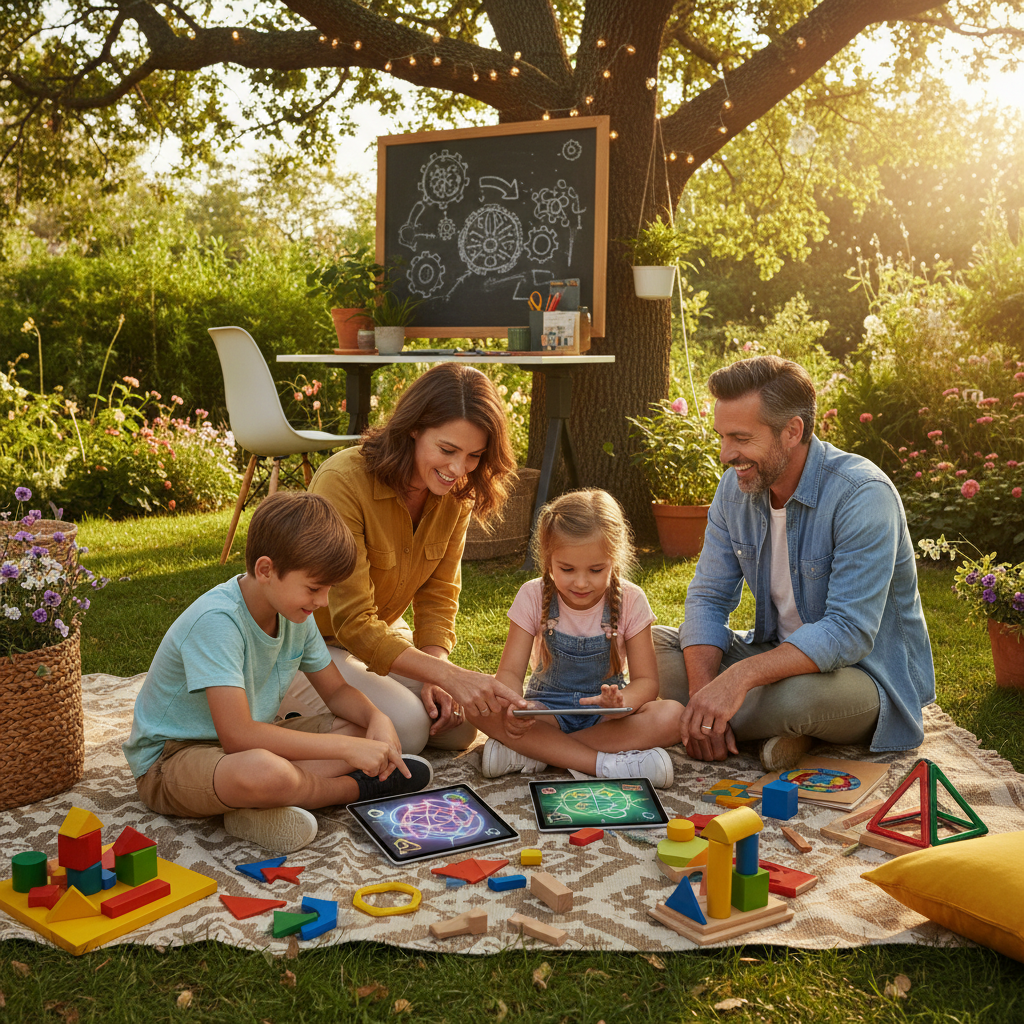
Every evening, the same scene plays out in millions of homes: a backpack dropped at the door, a snack grabbed, and then — the wall. Homework time becomes a standoff, a negotiation, sometimes a full meltdown. What most parents don't realize is that this isn't a discipline problem — it's a focus problem, and the solution isn't stricter rules.
Children's brains don't simply switch from "school mode" to "homework mode" at 3:30 PM. Attention is a resource, and after a full day of holding it together, most kids are genuinely depleted. Understanding this shift is the first step toward building an after-school routine that actually sticks.
Why Homework Resistance Happens
When your child drops their backpack and stares blankly at a math worksheet, they're not being difficult — their brain is recovering. Sustained attention draws on the prefrontal cortex, the part of the brain responsible for focus, impulse control, and decision-making. In children under 12, this region is still actively developing, which means their attention reserves run out faster than adults expect.
Add the sensory load of a school day — noise, transitions, social dynamics, instructions — and you have a child whose cognitive tank is genuinely low. Pushing harder at this moment doesn't refuel the tank. It drains it further.
The Attention Gap No One Talks About
Research from the American Academy of Pediatrics consistently highlights that children need unstructured recovery time after school before engaging in mentally demanding tasks. This recovery window isn't laziness — it's neurological necessity. Skipping it is the single most common reason homework battles escalate.
The attention gap isn't about motivation or willingness. It's about timing. A child who resists homework at 3:45 PM may sit down willingly and productively at 4:30 PM — simply because their brain has had time to reset.
What Focus Actually Costs a Child
Focus isn't free. Every act of attention — following a teacher's instructions, staying seated, navigating lunchtime social dynamics — uses real cognitive energy. Studies in cognitive load theory, developed by educational psychologist John Sweller, confirm that working memory has strict limits, especially in young learners.
When children arrive home, they often have just enough focus left to choose a snack. Expecting them to pivot immediately to homework ignores the very real cost of the attention they've already spent. To understand more about how children's natural attention windows work, Why Kids Can't Sit Still: Attention Spans Explained offers a deeper look at the science behind your child's behavior.
The Problem With Rigid Homework Schedules
Many parents default to the "homework first, play later" rule — a logical-sounding approach that often backfires. When a child's focus window hasn't reopened yet, sitting them down to work produces frustration, avoidance, and low-quality output. The work gets done grudgingly, mistakes pile up, and the emotional cost for both parent and child rises.
Rigidity without awareness of a child's natural rhythms creates a cycle: low focus leads to poor effort, poor effort leads to parental frustration, frustration leads to resistance, and resistance leads to the homework battle becoming a nightly event. The schedule isn't working because it doesn't account for the most important variable — the child's brain.
The "Reset Window" Every Child Needs
The most effective after-school routines build in a deliberate reset window between school arrival and homework time. This isn't screen time, and it isn't unstructured chaos — it's intentional decompression. The goal is to allow the nervous system to downshift before asking the brain to gear back up.
Effective reset activities share a few qualities:
The key word is predictable. Children regulate focus far better when they know what comes next. A reset window that flows naturally into a homework block — every day, at the same time — removes the argument entirely.
Building a Micro-Routine That Actually Works
Micro-routines are short, sequenced blocks of activity that align with children's natural attention spans rather than fighting them. Instead of one long "homework hour," micro-routines break the after-school period into predictable, manageable chunks. The brain responds to this structure by anticipating transitions, which actually improves focus readiness.
The National Institute of Child Health and Human Development notes that predictable home routines are among the strongest environmental predictors of children's self-regulation. When children know the rhythm of their afternoon, they spend less mental energy resisting — and more mental energy learning.
The After-School Sequence That Works
A high-functioning after-school micro-routine doesn't need to be complicated. It needs to be consistent. Here's a framework that works across age groups from 5 to 12:
Arrive → Decompress → Refuel → Transition → Work → Reward
Each block serves a specific neurological purpose. Arrival allows the child to shed the social armor of the school day. Decompression lowers cortisol. Refueling (a healthy snack) stabilizes blood sugar, which directly affects concentration. The transition signal — something as simple as a consistent phrase or a short focus activity — primes the brain for work mode. The work block happens during the child's reopened focus window. The reward closes the loop.
How Long Each Block Should Be
Age matters enormously when sizing these blocks. A 5-year-old has a focus window of roughly 10–15 minutes; a 10-year-old can sustain 20–25 minutes with practice. Matching the homework block to the child's genuine attention capacity — not the amount of homework assigned — prevents the spiral of frustration.
A useful rule of thumb: the work block should be roughly 2–3 minutes per year of age. A 7-year-old works best in 14–21 minute focused sessions. Building in a short physical break between sessions (jumping jacks, a quick walk) resets attention for a second round if more work remains.
The Role of the Environment
Routine alone isn't enough if the environment is working against focus. Children's brains are highly reactive to environmental cues — visual clutter, background noise, and digital interruptions all compete for limited attentional resources. Creating a homework-ready space is not about perfection; it's about reducing friction.
A focus-friendly homework environment has four core qualities:
The physical environment sends a signal to the brain: this place means focus. Over time, simply sitting down in that space begins to prime attention — the same way a gym signals the body to get ready to move.
The Parent's Role in the Environment
Parents often underestimate how much their own emotional state shapes the homework atmosphere. When a parent approaches homework time with visible tension or urgency, children pick up on it immediately. Stress is neurologically contagious — the brain's mirror neuron system means children literally feel the anxiety of the adults around them.
Calm, consistent presence is more powerful than enforcement. Sitting nearby while the child works, offering quiet encouragement, and responding to frustration with curiosity rather than correction transforms the emotional climate of homework time. It signals safety, and the brain focuses best when it feels safe.
When Focus Training Changes Everything
Building a better homework routine addresses the environment of focus. But for children who struggle with attention consistently, the deeper opportunity is to build focus as a skill — one that strengthens with the right kind of practice. Just as physical training develops strength over time, cognitive training develops the brain's capacity to sustain, shift, and return attention.
This is where intentional focus practice, woven into a child's daily rhythm, becomes a game-changer. According to research published by the Association for Psychological Science, attention training in children produces measurable improvements in academic performance, emotional regulation, and working memory — outcomes that extend far beyond homework completion.
Making Focus Practice Feel Like Play
The challenge with focus training for children is that traditional approaches feel like more work. Worksheets, drills, and structured exercises trigger the same resistance as homework — especially after a depleted school day. The breakthrough comes when focus training is embedded in something children want to do.
Gamified focus training — where children earn rewards, level up, and explore story-driven missions — harnesses the brain's natural dopamine response to novelty and achievement. The child doesn't experience it as practice. They experience it as play. But the cognitive gains are real, and they carry directly into the homework block that follows.
Short Sessions, Lasting Results
One of the most important insights from attention research is that shorter, more frequent focus sessions outperform long, infrequent ones. Five to ten minutes of intentional, engaging focus practice — done consistently — builds attentional capacity faster than an occasional extended effort. This is the science behind micro-learning: small, well-designed sessions aligned with natural attention windows produce compounding results over time.
For parents looking for a practical entry point, embedding a short focus-building activity before the homework block can prime the child's brain for the work ahead. It becomes the "transition signal" in the micro-routine — the moment that tells the brain: focus time is starting, and it's going to be fun.
Common Mistakes to Stop Making Tonight
Even well-intentioned parents fall into patterns that make the homework battle worse. Awareness of these traps is half the solution:
Consistency isn't rigidity. It's reliability. Children's brains learn routines through repetition, and the first two weeks of any new after-school structure will feel harder than the problem it's solving. The payoff comes in week three, when the routine becomes automatic and the homework battle quietly disappears.
The Bigger Shift: From Battle to Partnership
The homework battle ends when parents stop trying to force focus and start building conditions where focus can naturally emerge. This shift — from enforcement to environment design — is one of the most empowering changes a parent can make. It removes the adversarial dynamic and replaces it with a shared system both parent and child understand.
Children who experience consistent, low-pressure homework routines don't just get their homework done more easily. They begin to internalize the structure. They learn that focused effort is followed by reward. They build the habit of showing up mentally, even when a task is hard. These are not just homework skills — they are life skills.
Focus, at its core, is a superpower. And like every superpower, it grows stronger with the right training, the right environment, and the right guide. The after-school routine you build today isn't just solving tonight's homework problem — it's shaping the learner your child is becoming.